
上海滩
Chinese scientists develop ‘brain-reading’ AI model to help predict depression risk, may inspire future emotional-perception humanoids_我的网站

一 |
Chinese scientists have developed a “brain-reading” AI model that could help predict the risk of depression among adolescents up to four years in advance by analyzing how humans respond to facial expressions, a technology expected to inspire future development of embodied intelligent humanoids capable of perceiving human emotion and thoughts through nuanced facial cues.
WHO data show that around 332 million people worldwide have depression, about one-third of whom have treatment-resistant forms of the condition. In China, an estimated 95 million people suffer from depression, National Business Daily reported, citing statistics from the China Mental Health Survey.
Using data from a population-based longitudinal adolescent cohort recruited across several European countries, the research team led by Lu Han, assistant professor at the School of Artificial Intelligence, Shenzhen University, has built an AI model that predicted which 19-year-olds were more likely to develop depression at the age of 23. The predictions were backed up by an independent clinical cohort of individuals with depression. The team’s paper was published in the journal Science Advances this month.
According to Lu, the study used brain scans taken at age 19 to predict depression-related symptoms at age 23. The study focuses on adolescence because the transition from adolescence to early adulthood is a key developmental period when depressive symptoms can increase rapidly. The earlier risks are identified, the greater the opportunity for prevention, Lu told the Global Times on Monday, adding that the findings need to be further validated in middle-aged and older adults and across different ethnic groups in future research.
In this study, the researchers analyzed data from adolescents in the IMAGEN, a population-based longitudinal cohort recruited across several European countries. At age 19, participants underwent an fMRI emotional-face task, and their emotional symptoms were assessed using standardized questionnaires. Genetic data obtained from blood samples were also analyzed, and participants were followed up at age 23. The researchers examined whether neural representations of angry faces at age 19 were associated with emotional symptoms and could predict elevated emotional symptoms four years later.
According to Lu, people without depression can more easily distinguish emotional changes based on others’ facial expressions and respond accordingly – for example, responding with friendliness to a smiling expression. But people with depression cannot do this, and are more likely to assume people are angry with them.
A brain-aligned deep-learning model developed by Lu’s team suggested that those participants whose brains were less able to distinguish between different facial emotions and tended to perceive others as angry were more likely to develop symptoms of depression and anxiety in adulthood.
The hypothesis that adolescents at risk of depression may respond differently to other people’s facial expressions than those without such risk based on the negative information processing bias long observed in depression research: people at risk of depression are more likely to notice, interpret, or remember negative social information, Lu said.
The researchers focused on angry facial expressions because they signal social threat and rejection, which are closely linked to interpersonal difficulties and negativity bias associated with depression. They hope to further understand how this bias develops within the visual system.
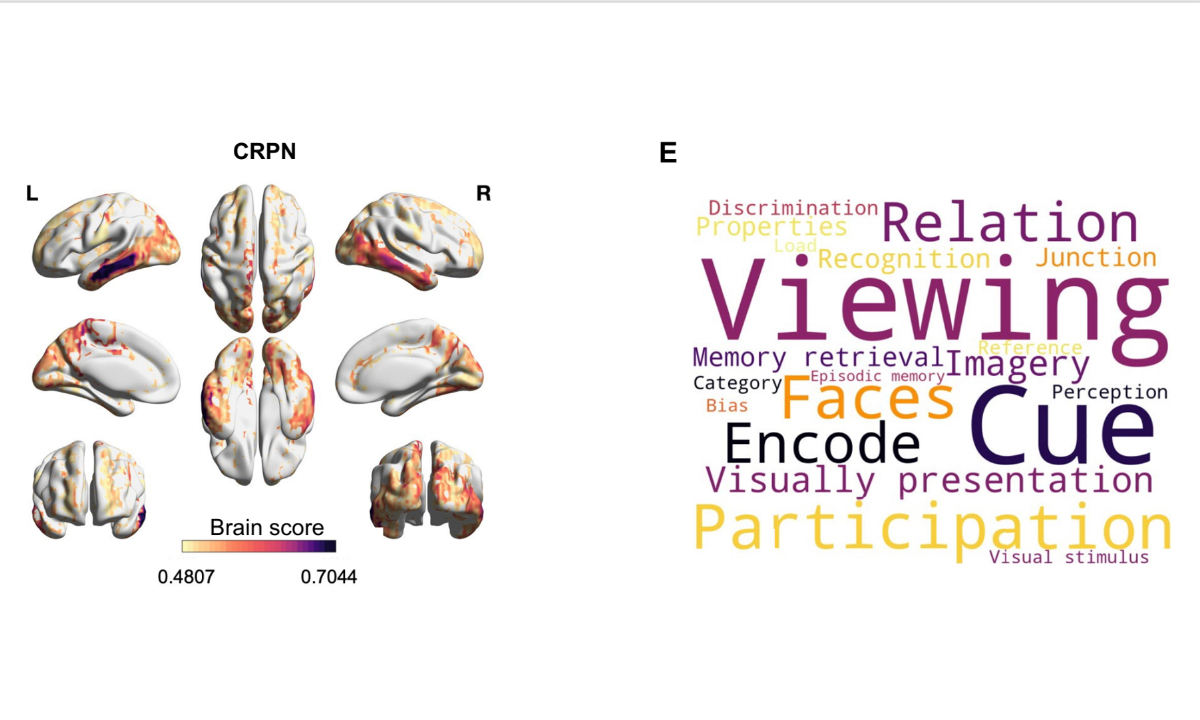
Building on this, they created a deep learning model, which mimics how the brain processes visual information, to predict how the brain encodes abstract emotional concepts such as anger.
They found that 19-year-olds whose response to facial expressions was skewed in favour of negative emotions or memories were the most likely to develop some form of depression.
Based on these findings, Lu’s team then developed a marker that can identify possible warning signs.
According to Lu, the study found that the computational biomarker was linked to the depression-related variant rs11123030 and polygenic risk for depression, suggesting that genetic susceptibility may affect emotional perception. It also provided predictive information beyond family stress and socioeconomic factors, complementing rather than replacing environmental risk factors. Therefore, depression is neither purely genetic nor purely psychological, but a complex mental disorder arising from the interplay of genetic susceptibility, brain development, emotional and cognitive processes, and life experiences.
According to Lu, the study is also expected to advance AI by aligning deep neural networks with human brain activity and using parameter perturbations to probe neural mechanisms, allowing models to both predict and explain how biases may arise.
The findings suggest that future affective computing and embodied AI should go beyond simply labeling facial expressions, incorporating visual details while preventing prior assumptions from overriding real-time sensory input, Lu said, adding that the findings could provide valuable insights for developing more interpretable robotic perception systems that more closely emulate the way humans process emotions.
。 新加坡的永久居民(PR)制度,虽相较于英美等国较易申请,但其特性和要求却显示出PR身份的不确保性。

二 | 新加坡PR需每五年更新一次再入境许可(REP),否则可能面临PR资格的丧失,由此,新加坡PR在某些人眼中仿佛是一种“五年签证”。再入境许可(REP)的重要性 新加坡PR若想离开并重新进入新加坡而保持其永久居民身份,必须持有有效的REP。

三 | 如果PR在没有有效REP的情况下离境或其身份证在海外过期,其永久居民身份将自动失效。从历史经验来看,长时间未在新加坡居住、缺乏工作或税务记录的PR,续签REP时可能面临拒签风险。新加坡移民局在处理PR和REP申请时,其政策常被描述为“三不”:不拒绝、不公开、不解释,增加了申请过程的不确定性。

四 | PR身份的取消条件 获取PR并不代表可以无条件永久居留。以下行为可能导致PR身份被取消:材料造假:一旦被发现提供虚假材料,不仅面临法律惩处,还将可能被取消PR身份。频繁离境:没有有效REP的频繁离境或长时间海外居住,会导致PR资格被撤销。缺乏贡献:在续签REP时,缺乏足够的税务和公积金(CPF)记录,可能只获得一年的临时续签。干涉内政:涉及本地政务活动可能导致PR资格被取消。拒绝兵役:对于男性PR,拒绝国民兵役可能导致严重后果,包括取消PR身份。

五 | 触犯法律:在新加坡犯罪,会严重影响PR资格。国际PR政策比较 相较于其他国家,新加坡的PR制度虽然在居留要求上相对宽松,但其它国家通常对PR有更明确的居留时间要求。

六 | 例如,英国和美国的PR需要定期入境维持其身份,加拿大和澳大利亚则对在国内居住有最低时长要求。

七 | 新西兰则提供了一种无居住要求的永久返回签证(IRRV),允许持有者无限制地离开并重新进入国家。法律和社会责任 新加坡总理李显龙强调,新加坡公民和PR需要能够融入社会、为经济做出贡献,并忠诚于国家。

八 | 新加坡的PR制度旨在吸引能够积极参与并支持国家发展的个人。

九 | 总的来说,新加坡的PR身份虽提供了在新加坡生活的机会,但其维持条件严格,反映了新加坡政府对永久居民资格的谨慎态度。因此,持有PR的个人需时刻留意自己的法律责任和居留条件,以确保不因疏忽而丧失宝贵的居留资格。

十 |
Current article:http://xrf.zangjiwuqihuncongcherua.cyou/list_by9/e7bqqd.html
Published on:07:01:46


1
深圳瑞捷:半导体洁净室业务尚处市场拓展期 收入占比较低2
关于开展即开票“马上有福、幸运好礼”丙午马生肖票营销活动的公告3
7,000mAh बैटरी वाला पतला 5G फोन वो भी सिर्फ 19,999 रुपये में, स्नैपड्रैगन प्रोसेसर भी4
最高人民检察院依法逮捕中国人寿原董事长王滨_最高检依法对王滨决定逮捕_存款5
深圳首批近百家福彩站升级为公益驿站6
演唱会门票未核销,本人愿承担手续费被拒退票7
OPPO Find X5 Pro强悍升级,前辈旗舰闻声价崩,低价超级给力_Mariana_价格8
Nonprofit seeks insight from devices left behind by veterans who died by suicide9
一审被判无期!67岁恒大老板许家印近照曝光:头发眉毛全白 体态微胖10
盘活停车场空间 商场门前建起体育公园11
新赛季进攻火力最强球队Top10:雷霆仅第4,四星76人登顶12
腾讯联合拳头公司成立腾津体育13
AMD Radeon VII发布;首款7nm图形卡,Super RTX 208014
摩托车疑被藏毒 越堤族及时发现两粒毒丸急报警15
What are the rules of war? And how do they apply to Israel's actions in Gaza?
- 随机推荐
1
フェラーリ新型テスタロッサ、1036馬力の正体。SF90から何が変わり、何が変わらなかったのか2
美国一男子枪杀8名亲属后自杀:共进晚餐时作案,被害者包括4名儿童3
济南购彩者喜中顶呱刮“十倍幸运”头奖25万元4
Mercenary Leader Prigozhin Reported Dead in Plane Crash by Russian State News5
两度领先惨遭翻盘!郑钦文又输了6
杭州地铁9号线二期年底具备通车条件 7个新站点抢先看7
南通大学杏林学院昆韵予安实践团开展“雅韵润少年,昆声传文脉”主题宣讲活动8
2025国家补贴持续到什么时候结束?2025国补政策结束时间最新消息9
“宝藏漳州·活力芗城”美好生活嘉年华举办10
兴城市海洋与渔业局举办海洋与渔业安全生产培训班11
长鑫科技:首次公开发行超额配售选择权全额行使12
中国跳水队本届世锦赛第8金:陈芋汐+全红婵=冠军13
B站悄悄上线Steam账号展示功能:查成分时代来了!14
‘G7 Is Irrelevant’: 'Global South' Holds West Responsible For Ukraine Crisis, Says Think-Tank Chief15
NASA资助18个前沿概念研究,含月球熔岩管探测、土星环探测等